

Discover how scientific research reveals the remarkable color, aroma, and flavor of Afghan saffron—and why Saffronate Coffee brings this treasured ingredient into your daily cup.
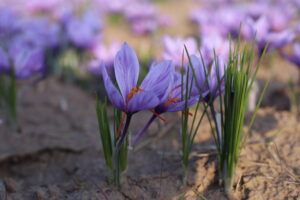
For centuries, saffron has been treasured as one of the world’s most precious spices. Known as “Red Gold,” saffron is celebrated for its vibrant golden color, distinctive aroma, and rich, complex flavor.
Among the regions producing this remarkable spice, Herat, Afghanistan, has earned recognition for its saffron cultivation and quality.
At Saffronate Coffee, we bring together two exceptional ingredients: specialty coffee sourced from Brazil, Ethiopia, and Colombia, and premium saffron from Herat, Afghanistan.
But what makes Afghan saffron so special? Beyond its rich cultural heritage, scientific research offers valuable insight into its distinctive characteristics.
In 2022, researchers published a scientific study titled “Quantification of Afghan Saffron’s Moisture and Main Compounds (Crocin, Picrocrocin and Safranal) for Quality Evaluation” in the journal Scientific Research Communications.
The study, conducted by Raihana Halim and fellow researchers, evaluated five saffron samples collected from suppliers in Herat, Afghanistan.
Using internationally recognized ISO 3632-2 testing methods, the researchers examined key compounds that determine saffron’s color, taste, and aroma.
Their findings provided valuable scientific evidence of the quality characteristics of the Afghan saffron samples.
Saffron’s unique sensory characteristics come primarily from three naturally occurring compounds.
Crocin is responsible for the beautiful golden-yellow color associated with saffron.
When saffron comes into contact with water, its natural coloring compounds create the distinctive golden hue that has made the spice desirable for centuries.
The study found crocin coloring-strength values ranging from 230.52 to 255.15 in the tested Afghan saffron samples, demonstrating strong coloring characteristics.
At Saffronate Coffee, this natural golden character is part of what makes our saffron-infused coffee experience distinctive.
Picrocrocin contributes to saffron’s characteristic bitter taste, an important part of its complex flavor profile.
The researchers reported picrocrocin values ranging from 68.86 to 72.63 in the Afghan saffron samples.
Saffron’s distinctive taste helps create an experience that goes beyond ordinary coffee.
In Saffronate Coffee, the character of saffron complements the depth of specialty coffee, bringing together familiar coffee notes with a unique saffron flavor.
Safranal is one of the key compounds responsible for saffron’s unmistakable aroma.
The study recorded safranal values ranging from 38.52 to 40.21 in the tested samples.
This aromatic quality is one of saffron’s most recognizable characteristics and an important reason it has been valued in culinary traditions around the world.
When combined with carefully selected specialty coffee, saffron contributes a distinctive aromatic dimension to the brewing experience.
Not all saffron has the same quality characteristics.
The international standard ISO 3632 provides methods and criteria for evaluating saffron based on important quality indicators, including coloring strength, flavor-related compounds, aroma-related compounds, and moisture content.
Category I represents the highest quality classification under the standard.
In the 2022 study, the researchers reported that the tested Afghan saffron demonstrated strong coloring and flavoring characteristics. The samples’ moisture levels, ranging from 5.12% to 5.74%, were also within the Grade I requirements discussed in the research.
Some individual aroma and flavor measurements were outside the Category I ranges described by the researchers, and they emphasized that further testing was needed for a more comprehensive evaluation.
Nevertheless, their research provides important scientific insight into the quality potential of saffron cultivated in Herat.
At Saffronate Coffee, our mission is to bring the extraordinary character of saffron into a familiar daily ritual.
We source our saffron from Herat, Afghanistan, and combine it with specialty coffee from Brazil, Ethiopia, and Colombia.
Our coffee is roasted and infused in the United States to create two distinctive experiences:
Saffronate Premium Coffee
Our richest saffron-infused blend, where saffron leads and coffee follows. Its distinctive flavor features floral, honey-like, hay-like, aromatic, and earthy notes, with a natural golden hue.
Saffronate Gold Coffee
Our everyday blend offers a balanced experience where specialty coffee takes the lead and saffron adds a gentle aromatic touch, creating a smooth, flavorful cup.
Both blends reflect our commitment to bringing together exceptional ingredients, cultural heritage, and specialty coffee craftsmanship.
Afghan saffron represents much more than an ingredient. It reflects generations of agricultural tradition, careful harvesting, and the distinctive characteristics of the land where it grows.
Scientific research adds another dimension to this story by helping explain the natural compounds responsible for saffron’s remarkable color, taste, and aroma.
At Saffronate Coffee, we are proud to celebrate this heritage by combining saffron from Afghanistan with specialty coffee from around the world.
From the fields of Herat to your cup, every sip tells a story.
Explore our saffron-infused specialty coffees at Saffronate.com.
Where Ancient Luxury Meets Everyday Pleasure.
Halim, R., Sherzay, N., Faqeryar, N., & Hashimi, M. H. (2022).
Quantification of Afghan Saffron’s Moisture and Main Compounds (Crocin, Picrocrocin and Safranal) for Quality Evaluation.
Scientific Research Communications, Volume 2, Issue 1.
DOI: https://doi.org/10.52460/src.2022.003
Research clarification: This independent scientific study examined five saffron samples sourced from Herat, Afghanistan. It did not test Saffronate Coffee or the specific saffron used in our products. Findings from the study provide general scientific background about Afghan saffron quality rather than certification of Saffronate’s ingredients.